Editorial Flow

Scientific Open Access Publishing (SOAP) maintains an impartial and comprehensive evaluation system managed by active academic professionals. Our workflow balances scholarly depth, objective assessment, and timely processing. Across our publications, we primarily implement single-blind peer review involving a minimum of two external experts. Overall academic standards and final editorial outcomes are directed by the Editor-in-Chief.

Overview of the Editorial Process
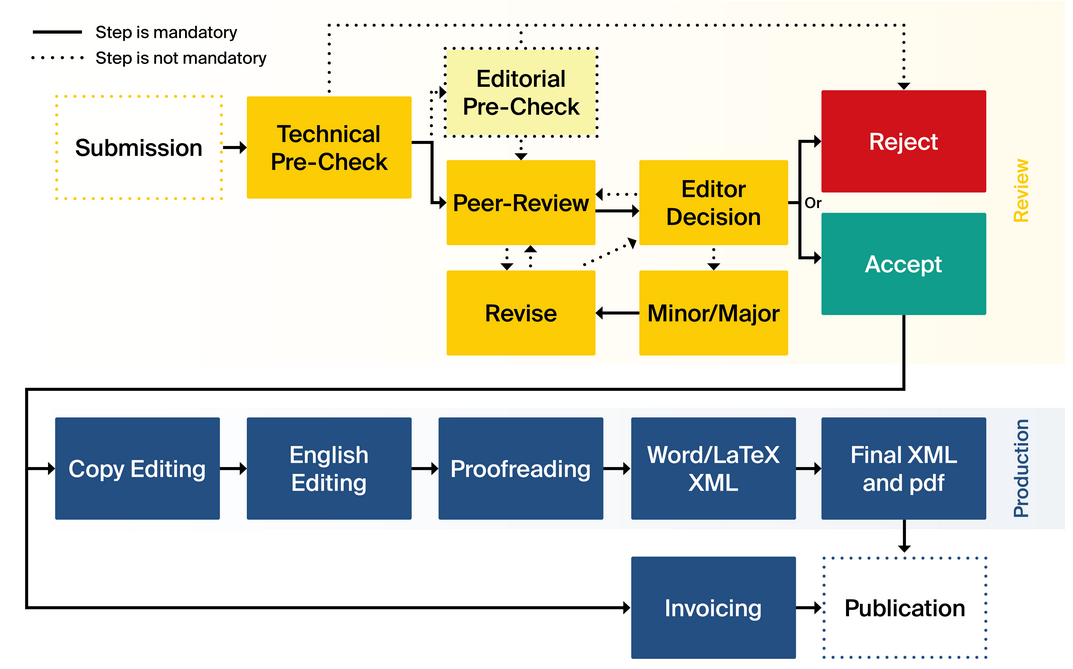
Figure 1: Summary of the Editorial and Peer-Review Workflow

1. Initial Evaluation Phase

Every submission undergoes an early two-tiered screening prior to formal review:

  • Technical & Formatting Audit (Managing Editor): Evaluates manuscript preparation, compliance with submission guidelines, structural integrity, and initial originality checks.
  • Academic Scope & Quality Check (Academic Editor): Assesses scientific validity, methodological soundness, and relevance to the journal's scope. The editor decides whether to dismiss the manuscript, request preliminary adjustments, or send it for full peer review.

*Note: To prevent conflicts of interest, Guest Editors are restricted from making editorial decisions on papers they author or co-author; independent Editorial Board members oversee such submissions.

2. Expert Peer Assessment

An assigned managing editor oversees the peer review workflow. Depending on the specific journal's policy, reviews are conducted under a single-blind or double-blind framework. Each paper receives at least two detailed referee reports from qualified specialists without financial or professional ties to the authors.

Criteria for Reviewer Selection:
  • Freedom from personal or professional conflicts of interest.
  • Institutional independence from all co-authors.
  • No co-authorship with manuscript authors within the past 3 years.
  • Qualification holding an advanced degree (PhD, MD, or equivalent).
  • Documented scholarly track record in the relevant field (indexed in Scopus/ORCID).
  • Active affiliation with a recognized research entity or academic institution.

Reviewers are typically requested to deliver their evaluations within 7–10 days. Time extensions may be granted upon reasonable request.

3. Editorial Outcomes & Revisions

The Academic Editor determines the final disposition of the manuscript by synthesizing reviewer feedback with their own scholarly judgement.

Acceptance

Approved for publication. The manuscript moves forward to copyediting, layout formatting, and proofreading.

Revision Required

Authors must address reviewer observations and submit a revised version. Major edits may require re-evaluation by the referees.

Rejection

The manuscript does not meet the publication threshold. Authors are notified with constructive comments and retain the right to appeal.

Reporting Frameworks & Benchmarks

SOAP encourages adherence to established international reporting standards to uphold scientific rigor and reproducibility:

ICMJE Guidelines
Standards for medical research conduct, ethical publishing, and authorship.
CONSORT Statement
Protocol and reporting standards for randomized clinical trials (checklist submission required).
TOP Standards
Promoting transparency, open research practices, and data sharing.
FAIR Principles
Guidelines ensuring research data is Findable, Accessible, Interoperable, and Reusable.
PRISMA Protocol
Best practices for reporting systematic reviews and meta-analyses.
ARRIVE Guidelines
Guidelines for preclinical in vivo animal experimentation (checklist recommended).
iThenticate Screening
Automated text-similarity analysis performed on all new submissions to ensure originality.

Editorial Governance & Integrity

Publication Ethics & Misconduct

SOAP strictly adheres to Committee on Publication Ethics (COPE) principles. Allegations of unethical behavior (including plagiarism, image manipulation, or duplicate submission) trigger formal investigations that may result in manuscript rejection or paper retraction.

Competing Interests: Authors, reviewers, and editors must declare any potential financial, personal, or professional conflicts. Conflicted editors or reviewers are recused from the decision-making pipeline.
Confidentiality Guarantees: Submitted manuscripts, reviewer identities (where applicable), and review reports are treated as strictly confidential and will not be disclosed to third parties.
Role of the Editorial Board: Board members guide journal policy, assist in evaluating submissions, maintain academic rigor, and promote ethical publishing standards.