Editorial Process
SOAP operates a rigorous and transparent peer review process handled by researchers and scholars. We aim for efficiency, rigor, and fairness. For most journals, we utilize single-blind assessment with at least two independent reviewers. The Editor-in-Chief oversees the academic quality and final decisions.
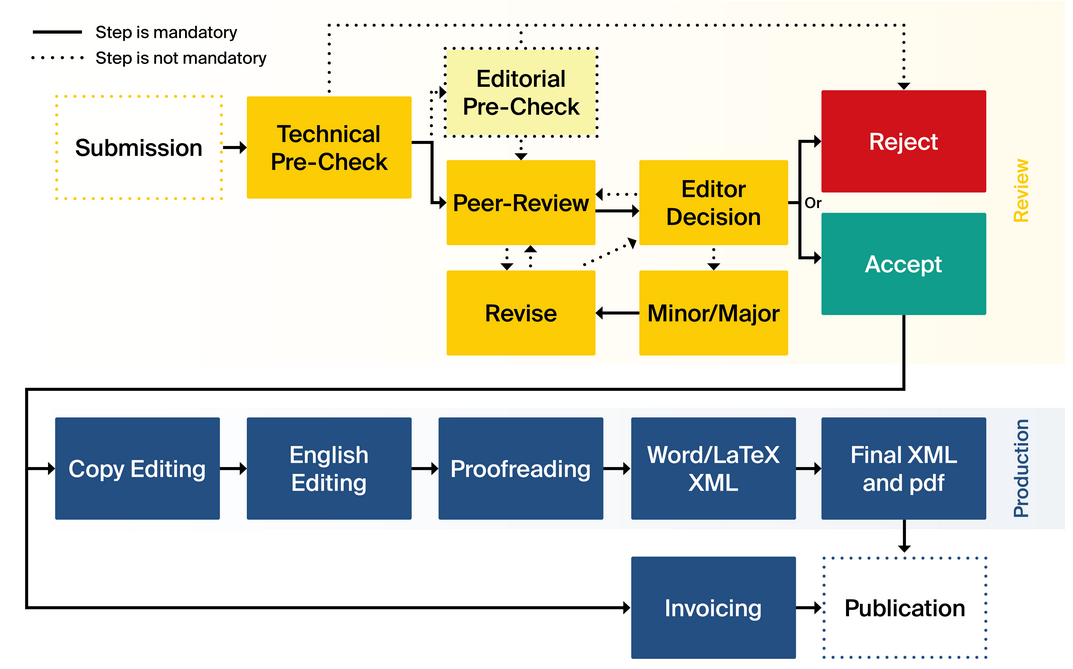
1. Pre-check Stage
This stage consists of two steps:
- Technical Pre-check (Managing Editor): Assesses suitability, adherence to standards, and rigor.
- Editorial Pre-check (Academic Editor): Assesses scientific soundness, methodology, and scope. The editor decides to reject, request revisions, or proceed to peer review.
*Note: Guest Editors cannot make decisions on their own manuscripts; these are handled by other Editorial Board members to avoid conflicts of interest.
2. Peer Review Process
A dedicated staff member coordinates the process. While most journals are single-blind, some operate double-blind. At least two reports are collected. Reviewers are selected based on expertise and lack of conflicts of interest.
- No conflicts of interest.
- Different institution from authors.
- No recent joint publications (3 years).
- Hold a PhD or MD.
- Proven publication record (Scopus/ORCID).
- Recognized academic affiliation.
Reviewers typically have 7–10 days to submit reports. Extensions are available upon request.
3. Decisions & Revision
The Academic Editor makes the final decision based on reports and their own assessment.
Accepted for publication. Formatting and proofreading follow.
Authors must address comments. May require a second round of review.
Rejected for publication. Authors have the right to appeal.
Reporting Guidelines & Standards
SOAP follows strict guidelines to ensure quality and ethical reporting:
Policies & Ethics
SOAP adheres to COPE guidelines. Suspected misconduct (plagiarism, data falsification) is investigated strictly, potentially leading to retraction.